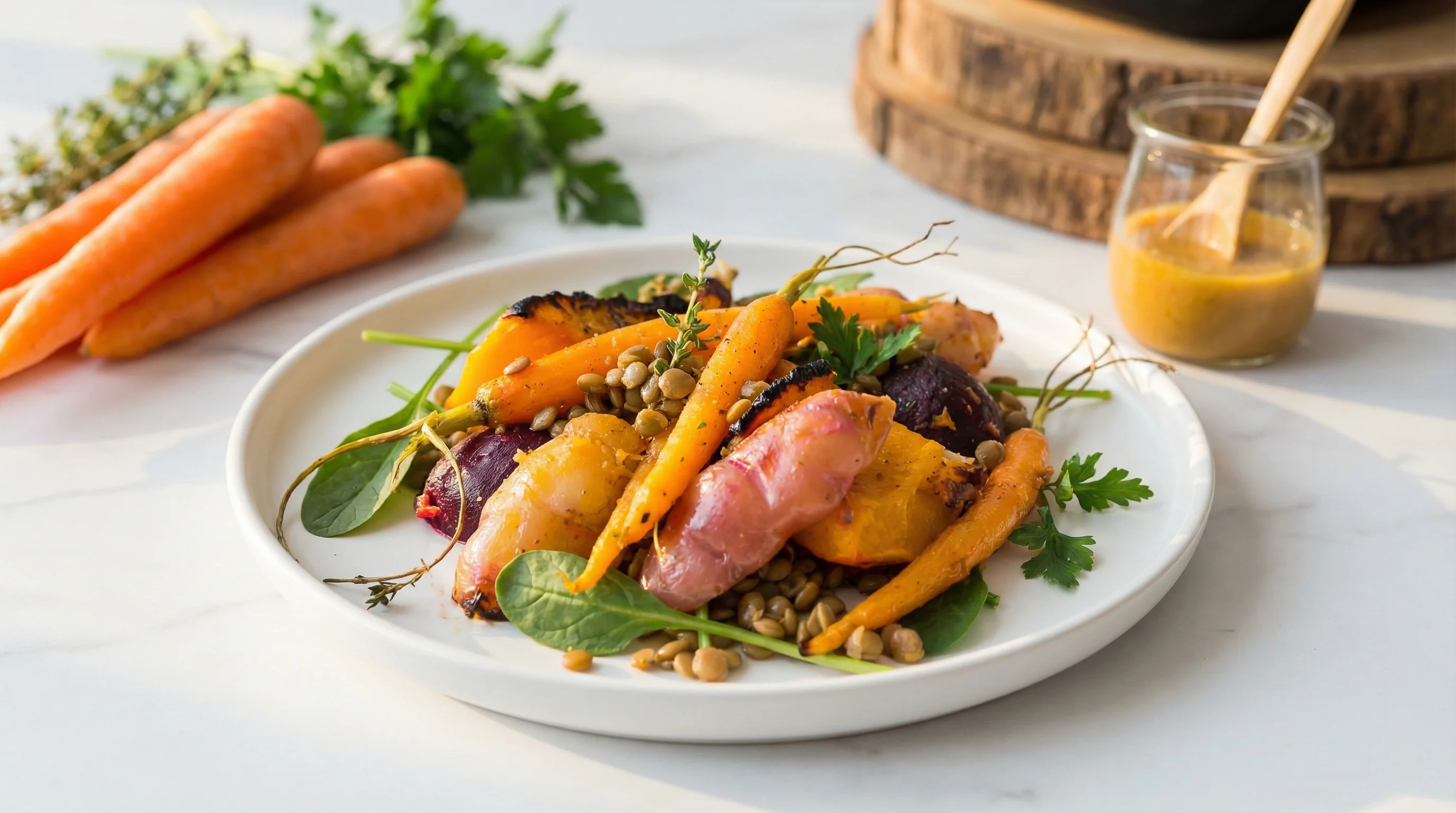
Low FODMAP Orange Miso Roasted Vegetable & Lentil Salad
A vibrant Asian-inspired salad featuring caramelized roasted vegetables, tender lentils, and a tangy orange miso dressing that'll have you reaching for seconds.
This recipe uses Low FODMAP ingredients and safe portions per Monash University guidelines. Canned lentils are low FODMAP at 1/2 cup (120g) per serving; this recipe provides exactly that amount when divided among 4 servings. Garlic-infused oil provides flavor without FODMAPs since oligosaccharides are not oil-soluble. Use ONLY green parts of spring onions, never the white bulbs. White miso is generally low FODMAP but you MUST check labels carefully for added garlic powder or onion powder, which would make it high FODMAP. Fresh ginger in small amounts (1 teaspoon total for 4 servings) is well-tolerated. Carrots, zucchini, and red bell peppers are all low FODMAP at the portions used. Baby spinach is low FODMAP at this serving size. Avoid high FODMAP vegetables like cauliflower, mushrooms, or asparagus in this recipe.
This stunning roasted vegetable and lentil salad brings together the best of Asian flavors in a way that's completely safe for your sensitive stomach. The magic happens when earthy root vegetables meet the umami-rich combination of white miso and fresh orange juice, creating a dressing that's both bright and deeply savory. Unlike traditional Asian salads that rely heavily on garlic and onion, this recipe uses garlic-infused oil and fresh ginger to build complex flavor without triggering IBS symptoms.
Roasting vegetables at high heat transforms their natural sugars into caramelized sweetness, which pairs beautifully with the protein-rich lentils. Canned lentils are a Low FODMAP lifesaver since the canning process reduces their oligosaccharide content, making them much gentler on your digestive system than dried lentils. The orange miso dressing ties everything together with a perfect balance of sweet, salty, and tangy notes that make this salad incredibly satisfying as either a main course or a substantial side dish.
This recipe is ideal for meal prep since the flavors actually improve after a day in the refrigerator. The vegetables maintain their texture beautifully, and the lentils soak up even more of that delicious dressing. Whether you're looking for a nourishing lunch option or a crowd-pleasing potluck contribution that happens to be gut-friendly, this salad delivers on both flavor and nutrition without compromise.
🥗 Ingredients
Metric
- 200g carrots, peeled and cut into 2cm chunks Choose firm, fresh carrots for best roasting results
- 100g zucchini, cut into 2cm chunks Pat dry before roasting to ensure caramelization
- 100g red bell pepper, cut into 2cm chunks Red peppers are sweeter and lower FODMAP than green
- 240g canned lentils, drained and rinsed Canned lentils are low FODMAP at 1/2 cup (120g) per serving; this recipe serves 4
- 3 tablespoons garlic-infused olive oil Divided: 2 tbsp for roasting, 1 tbsp for dressing. Must be garlic-infused, not fresh garlic
- 2 tablespoons white miso paste CRITICAL: Check label carefully for added garlic or onion powder, which are high FODMAP
- 60ml fresh orange juice About 1 medium orange, freshly squeezed
- 1 tablespoon rice vinegar Adds acidity to balance the sweet orange and savory miso
- 1 teaspoon fresh ginger, finely grated Small amount is low FODMAP; use microplane for best results
- 1 tablespoon maple syrup Pure maple syrup is low FODMAP; balances the dressing
- 60g baby spinach leaves Added at the end to wilt slightly from residual heat
- 2 tablespoons toasted sesame seeds For garnish; toast in dry pan for enhanced flavor
- 2 tablespoons sliced spring onion greens only Use ONLY green tops, not white bulbs which are high FODMAP
- Salt and black pepper to taste Season vegetables before roasting and adjust dressing as needed
Imperial
- 14oz mixed low FODMAP vegetables (carrots, zucchini, red bell pepper), cut into 3/4-inch chunks Choose firm vegetables that roast well
- 1 cup canned lentils, drained and rinsed Canned lentils are low FODMAP; avoid dried lentils
- 3 tablespoons garlic-infused olive oil Divided use for roasting and dressing
- 2 tablespoons white miso paste Check label for onion/garlic additives
- 1/4 cup fresh orange juice About 1 medium orange
- 1 tablespoon rice vinegar Adds brightness to the dressing
- 1 teaspoon grated fresh ginger Safe in small amounts for most people
- 1 tablespoon maple syrup Low FODMAP sweetener
- 2 cups baby spinach leaves Adds freshness and nutrients
- 2 tablespoons toasted sesame seeds For garnish and crunch
- 2 spring onions, green parts only, sliced White parts are high FODMAP
- Salt and pepper to taste Season according to preference
👨🍳 Instructions
- 1
Prepare and Roast the Vegetables
Preheat your oven to 200°C (400°F) and line a large baking sheet with parchment paper. Toss the chopped carrots, zucchini, and red bell pepper with 2 tablespoons of garlic-infused olive oil, salt, and pepper until evenly coated. Spread them in a single layer on the prepared baking sheet, ensuring they're not crowded so they caramelize rather than steam. Roast for 25-30 minutes, flipping halfway through, until the vegetables are tender and golden brown at the edges.
⏱️ 35 min - 2
Make the Orange Miso Dressing
While the vegetables roast, whisk together the white miso paste, fresh orange juice, rice vinegar, grated ginger, maple syrup, and remaining 1 tablespoon of garlic-infused olive oil in a small bowl. The miso may be thick at first, but keep whisking until you achieve a smooth, pourable consistency. Taste and adjust the seasoning, adding a pinch of salt if needed, though the miso is naturally salty.
⏱️ 5 min - 3
Prepare the Lentils
Rinse the canned lentils thoroughly under cold water and drain them well. Pat them dry with a clean kitchen towel to remove excess moisture, which helps them absorb the dressing better. Transfer the lentils to a large mixing bowl and set aside.
⏱️ 3 min - 4
Combine the Salad
Once the vegetables are roasted and slightly cooled (about 5 minutes), add them to the bowl with the lentils. Pour the orange miso dressing over the warm vegetables and lentils, then toss everything together gently but thoroughly. The warmth of the vegetables will help the dressing coat everything beautifully.
⏱️ 5 min - 5
Add Fresh Elements and Serve
Add the baby spinach leaves to the salad and toss gently until they begin to wilt slightly from the residual heat. Transfer the salad to a serving platter or individual bowls. Garnish generously with toasted sesame seeds and sliced spring onion greens. Serve warm or at room temperature. This salad can be refrigerated for up to 3 days and is delicious cold as well.
⏱️ 3 min
🔄 FODMAP-Friendly Swaps
If you cannot find FODMAP-safe miso without garlic/onion additives, this combination provides similar umami depth and saltiness
Some people are sensitive to fresh ginger; dried is milder and still provides warm spice notes
Provides protein if brown lentils do not agree with you; firm tofu is low FODMAP and absorbs the dressing beautifully
Any mild vinegar works well in the dressing to provide acidity
Alternative low FODMAP sweeteners that balance the tangy dressing
Provides different flavor profile while remaining low FODMAP
If you cannot find garlic-infused oil, asafoetida provides a garlic-like flavor and is low FODMAP in small amounts
🔬 The Science Behind This Recipe
Why This Recipe Works for Your Gut
This salad combines several ingredients that are naturally gentle on sensitive digestive systems. Lentils are one of the few legumes that can work well for people with IBS when prepared correctly. Canned lentils that have been rinsed thoroughly are lower in problematic sugars because much of the excess starch washes away. A serving of about ½ cup of canned lentils typically stays within low-FODMAP limits, providing protein and fiber without triggering symptoms. The fiber in lentils is also particularly beneficial for feeding healthy gut bacteria without causing the fermentation issues that other beans can create.
Garlic-infused oil is a clever workaround that delivers all the flavor of garlic without the digestive distress. The compounds that cause IBS symptoms in garlic are water-soluble, not fat-soluble, which means they don't transfer into the oil during infusion. You get the aromatic, savory taste your taste buds crave while keeping your gut calm. Similarly, fresh ginger acts as a natural digestive aid that has been used for centuries to soothe the stomach, reduce inflammation, and ease nausea without adding FODMAPs.
Miso paste adds a rich umami depth while contributing beneficial probiotics from the fermentation process. These live cultures can help support your gut microbiome. Orange provides vitamin C and natural sweetness without high-FODMAP fruits, making this salad both nutritious and satisfying. Together, these ingredients create a meal that nourishes your body while respecting your digestive boundaries.
Download Printable PDF
Save this recipe for offline use