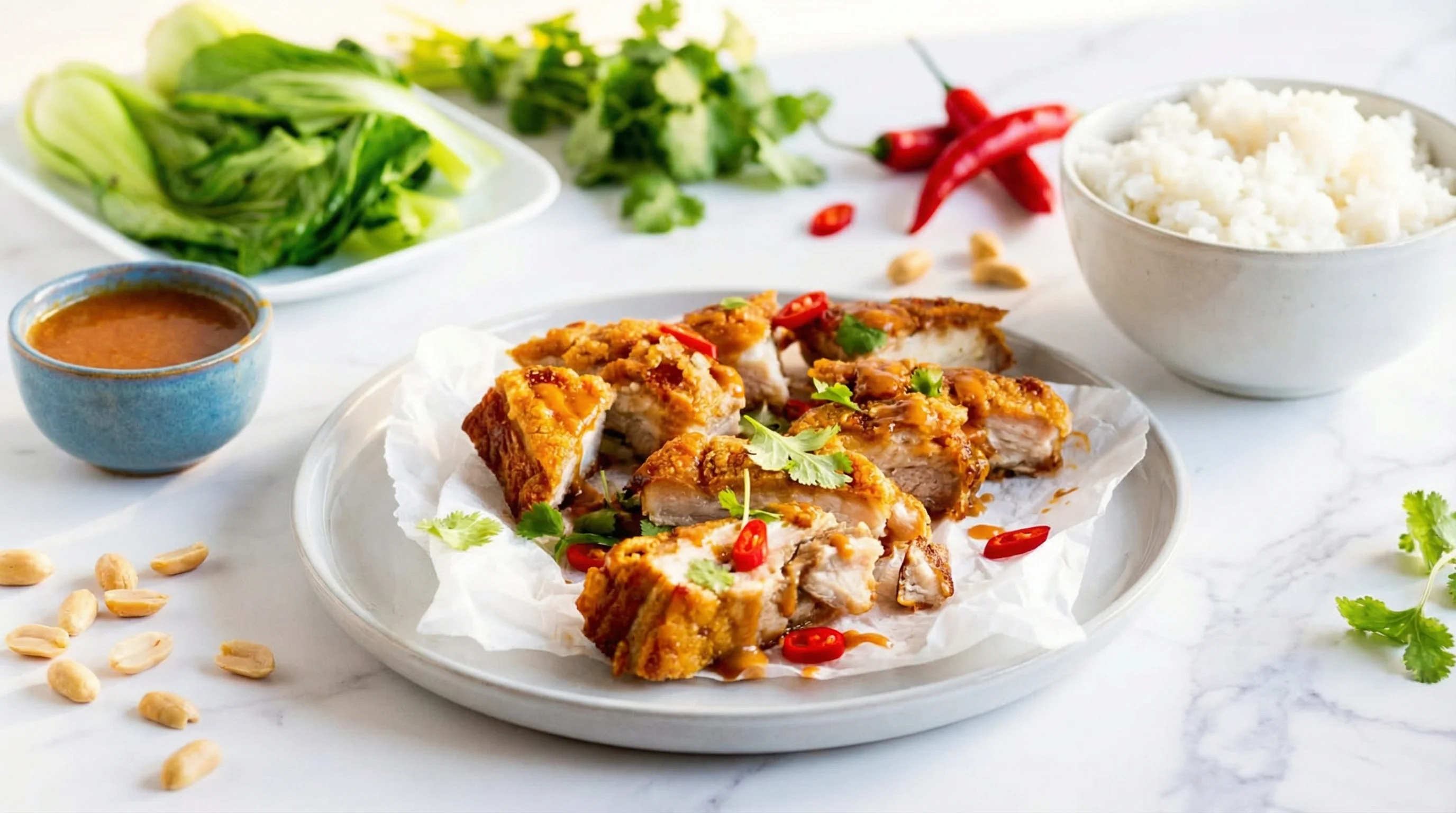
Low FODMAP Crispy Pork Belly with Peanut Sauce
Melt-in-your-mouth pork belly with crackling skin, served with a rich peanut sauce and fragrant coconut rice. Pure comfort food that's IBS-friendly!
This recipe is Low FODMAP when portions are controlled and proper ingredients are used. Pork belly is naturally FODMAP-free. Coconut milk is low FODMAP up to 125ml per serving; this recipe uses 50ml per serving. Peanut butter is safe up to 2 tablespoons per serving; this recipe uses 1 tablespoon per serving. Use only the green parts of spring onions as the white bulbs contain fructans. Ensure your five-spice powder is certified garlic-free and onion-free, or make your own blend with star anise, cloves, cinnamon, Sichuan pepper, and fennel seeds. Tamari must be certified gluten-free to avoid wheat-based FODMAPs. The ginger-infused oil is safe as FODMAPs don't transfer to oil during infusion; ensure it contains only ginger and oil with no garlic added. Rice vinegar and maple syrup in these amounts are Low FODMAP safe.
There's something utterly magical about perfectly cooked pork belly. The way the fat renders down to silky tenderness while the skin transforms into golden, shattering crackling is pure culinary alchemy. This Low FODMAP version proves you don't need garlic or onions to create deeply flavorful Asian-inspired dishes that satisfy both your taste buds and your digestive system.
The secret to restaurant-quality pork belly at home is patience and proper preparation. By scoring the skin and using a salt rub, you create the perfect conditions for that coveted crispy texture. The slow roasting method ensures the meat becomes incredibly tender while the fat renders beautifully. Meanwhile, the peanut sauce brings umami depth with tamari, natural peanut butter, and a hint of ginger-infused oil, creating a flavor profile that's both complex and gut-friendly. The coconut rice adds a subtle sweetness that balances the rich pork perfectly.
This recipe does require advance planning with its overnight drying step, but the hands-on time is minimal and the results are absolutely worth it. Whether you're cooking for a special occasion or simply treating yourself to something extraordinary, this dish delivers the kind of satisfaction that makes Low FODMAP eating feel like a celebration rather than a restriction. Serve it with steamed bok choy or green beans for a complete meal that rivals any restaurant offering.
🥗 Ingredients
Metric
- 1kg pork belly, skin-on Choose a piece with even fat distribution
- 2 tablespoons sea salt For the initial rub
- 1 teaspoon Chinese five-spice powder Use garlic-free and onion-free blend only
- 300g jasmine rice Rinsed until water runs clear
- 200ml coconut milk Full-fat for best flavor, 50ml per serving is Low FODMAP
- 200ml water For cooking the rice
- 4 tablespoons natural peanut butter Smooth, no added sugar, 1 tablespoon per serving is Low FODMAP
- 3 tablespoons tamari Must be certified gluten-free
- 2 tablespoons rice vinegar Unseasoned
- 2 tablespoons ginger-infused oil Made with ginger only, no garlic
- 1 tablespoon maple syrup Pure maple syrup
- 3-4 tablespoons warm water To thin the peanut sauce
- 2 spring onions, green parts only Sliced thinly for garnish
- 1 tablespoon toasted sesame seeds For garnish
Imperial
- 2.2 lbs pork belly, skin-on Choose a piece with even fat distribution
- 2 tablespoons sea salt For the initial rub
- 1 teaspoon Chinese five-spice powder Use garlic-free and onion-free blend only
- 1½ cups jasmine rice Rinsed until water runs clear
- ¾ cup plus 2 tablespoons coconut milk Full-fat for best flavor, 3 tablespoons per serving is Low FODMAP
- ¾ cup plus 2 tablespoons water For cooking the rice
- 4 tablespoons natural peanut butter Smooth, no added sugar, 1 tablespoon per serving is Low FODMAP
- 3 tablespoons tamari Must be certified gluten-free
- 2 tablespoons rice vinegar Unseasoned
- 2 tablespoons ginger-infused oil Made with ginger only, no garlic
- 1 tablespoon maple syrup Pure maple syrup
- 3-4 tablespoons warm water To thin the peanut sauce
- 2 spring onions, green parts only Sliced thinly for garnish
- 1 tablespoon toasted sesame seeds For garnish
👨🍳 Instructions
- 1
Prepare the pork belly
Pat the pork belly completely dry with paper towels. Using a sharp knife, score the skin in a crosshatch pattern, cutting through the skin but not into the meat. Rub the salt thoroughly into the scores and all over the skin. Place on a wire rack over a tray, skin-side up, and refrigerate uncovered for 12-24 hours to dry out the skin.
⏱️ 15 min - 2
Roast the pork
Remove pork from refrigerator 30 minutes before cooking. Preheat oven to 160°C (320°F). Rub the five-spice powder into the meat side only, avoiding the skin. Place pork on a rack in a roasting pan and roast for 2 hours until the meat is tender. Increase oven temperature to 220°C (425°F) and roast for another 30-40 minutes until the skin is golden and crackling, watching carefully to prevent burning.
⏱️ 160 min - 3
Make the coconut rice
While the pork roasts, combine rinsed rice, coconut milk, and water in a medium saucepan. Bring to a boil over high heat, then reduce to low, cover, and simmer for 15 minutes. Remove from heat and let stand covered for 10 minutes to steam. Fluff with a fork before serving.
⏱️ 30 min - 4
Prepare the peanut sauce
In a small bowl, whisk together peanut butter, tamari, rice vinegar, ginger-infused oil, and maple syrup until smooth. Add warm water gradually, whisking until you achieve a pourable consistency. Taste and adjust seasoning if needed. The sauce should be rich but not too thick.
⏱️ 5 min - 5
Rest and slice
Once the pork is done, remove from oven and let rest for 10 minutes. This allows the juices to redistribute. Using a sharp knife, slice the pork belly into thick pieces, ensuring each slice has crispy crackling on top.
⏱️ 10 min - 6
Serve
Divide the coconut rice among four plates. Top with sliced pork belly and drizzle generously with peanut sauce. Garnish with sliced spring onion greens and toasted sesame seeds. Serve immediately while the crackling is still crispy.
⏱️ 5 min
🔄 FODMAP-Friendly Swaps
If avoiding peanuts, almond butter (up to 20g per serving) or tahini provide similar richness and are Low FODMAP
If avoiding coconut, use lactose-free cream for richness or just water for a lighter rice
For soy-free option, coconut aminos provide similar umami depth and are naturally gluten-free
Small amounts of brown sugar or glucose syrup are Low FODMAP alternatives for sweetness
Basmati rice or well-rinsed quinoa work equally well and are both Low FODMAP options
Make your own with star anise, cloves, cinnamon, Sichuan pepper, and fennel seeds to ensure no garlic or onion powder is included
Garlic-infused oil is Low FODMAP safe (FODMAPs don't transfer to oil), or use plain sesame oil for a milder flavor
🔬 The Science Behind This Recipe
Why This Works for Your Gut
This crispy pork belly recipe is a digestive win because it centers on naturally low-FODMAP proteins and fats that won't trigger IBS symptoms. Pork belly itself contains zero FODMAPs since it's pure protein and fat, making it an excellent choice when you're craving something rich and satisfying without the digestive consequences. The high fat content also helps slow digestion in a good way, promoting steady nutrient absorption and keeping you fuller longer without the blood sugar spikes that can sometimes worsen gut symptoms.
The supporting ingredients are equally strategic for sensitive stomachs. Coconut milk provides creamy richness without the lactose found in dairy, while its medium-chain fatty acids are easier to digest than other fats. Peanut butter, when consumed in small amounts (up to 2 tablespoons), stays within low-FODMAP limits and adds protein plus healthy fats that support gut lining repair. The ginger-infused oil is particularly clever—by infusing oil with ginger rather than eating fresh ginger in large amounts, you extract the anti-inflammatory compounds that can soothe digestive discomfort while avoiding excess fiber that might irritate a sensitive system.
Tamari (gluten-free soy sauce) rounds out the flavor profile without the wheat-based FODMAPs found in regular soy sauce. Together, these ingredients create a meal that's not just safe for your gut but actively supportive, delivering anti-inflammatory benefits and stable energy without fermentation, bloating, or cramping. It's proof that eating low-FODMAP doesn't mean sacrificing flavor or satisfaction.
Download Printable PDF
Save this recipe for offline use