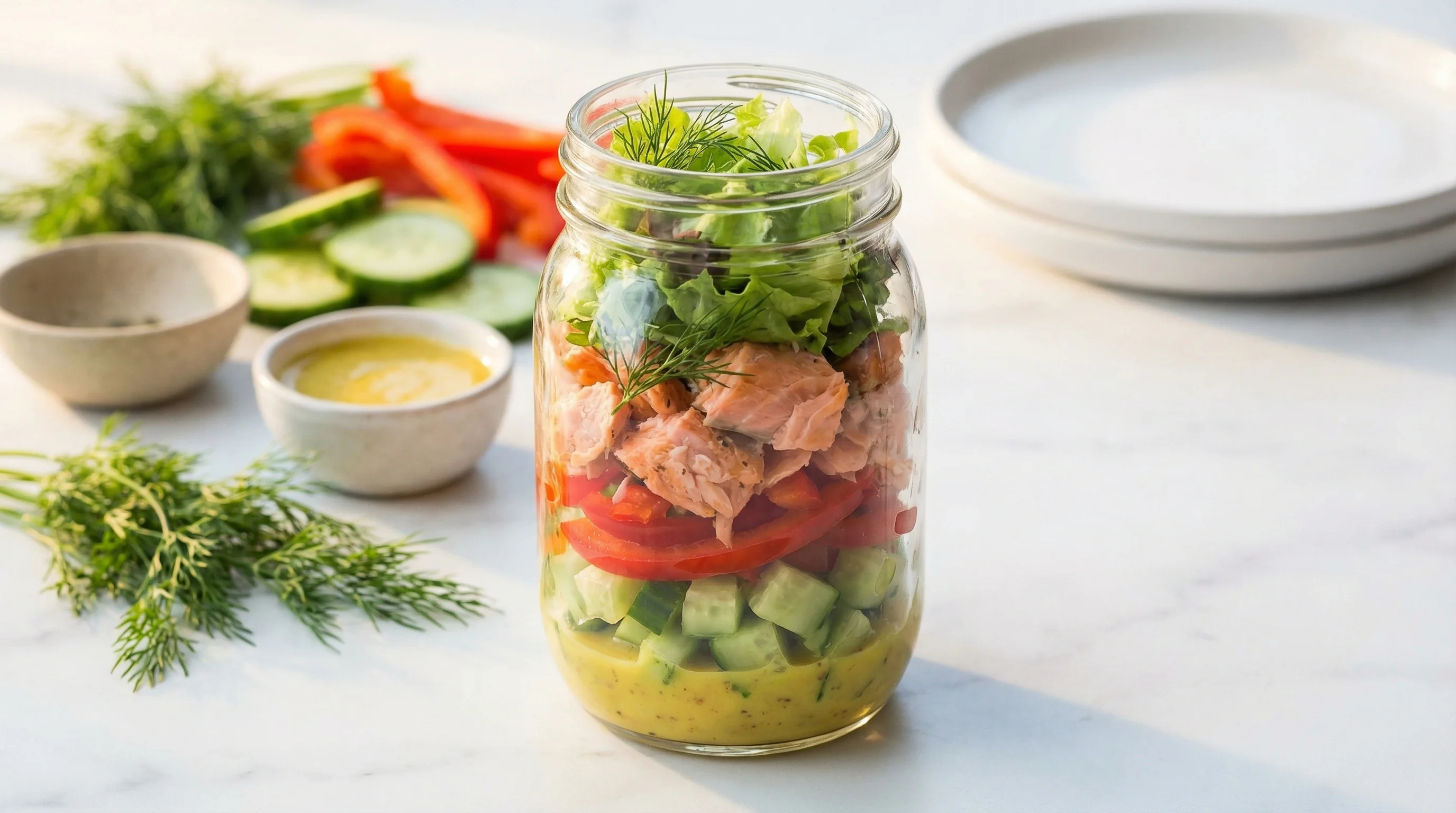
Low FODMAP Salmon Mason Jar Salad with Tangy Mustard Dressing
Layers of omega-3 rich salmon, crisp vegetables, and zesty mustard dressing create the ultimate portable low FODMAP lunch that stays fresh for days.
This recipe is carefully designed to be low FODMAP compliant. All vegetables are within safe serving sizes according to Monash University guidelines. Cherry tomatoes are lower in FODMAPs than regular tomatoes and safe at 75g per serving. Carrots and cucumber are unrestricted. The mustard dressing uses olive oil and vinegar, both FODMAP-free, with a small amount of maple syrup (low FODMAP up to 1 tablespoon). Ensure your Dijon mustard is pure and doesn't contain garlic, onion, or honey—most plain mustards are safe. Salmon is an excellent protein choice as all fish and seafood are naturally FODMAP-free. Pumpkin seeds are low FODMAP up to 20g per serving. This salad provides omega-3 fatty acids, which may help reduce inflammation in the gut.
Mason jar salads have revolutionized meal prep for anyone managing IBS, and this Low FODMAP Salmon Mason Jar Salad takes the concept to delicious new heights. The genius of this recipe lies in its strategic layering: dressing at the bottom, hearty proteins and vegetables in the middle, and delicate greens on top. This arrangement keeps everything crisp and fresh for up to four days in your refrigerator, making it the perfect solution for busy weekdays when cooking feels overwhelming. The combination of omega-3 rich salmon with gut-friendly vegetables provides not just satisfaction but genuine nutritional support for your digestive system.
What makes this salad particularly brilliant for the low FODMAP diet is how it showcases ingredients that are both safe and genuinely nourishing. The mustard dressing brings bold flavor without relying on garlic or onion, while the salmon provides protein and healthy fats that help you feel satisfied for hours. Cucumbers, carrots, and cherry tomatoes add that essential crunch and freshness, and they're all green-light foods on the FODMAP spectrum. The beauty of this recipe is its flexibility—you can prep multiple jars on Sunday and have grab-and-go lunches ready all week, each one tasting as fresh as the day you made it.
The key to success with mason jar salads is understanding the layering technique. Always start with the dressing, then add sturdy vegetables that won't wilt, followed by proteins, and finally your delicate greens. When you're ready to eat, simply shake the jar to distribute the dressing or pour everything into a bowl. This method has transformed lunch for countless people managing IBS, turning what could be a stressful meal into something you actually look forward to eating.
🥗 Ingredients
Metric
- 200g cooked salmon fillet, flaked Fresh or canned salmon works well; ensure it's cooled before assembling
- 60ml olive oil Extra virgin olive oil provides the best flavor for the dressing
- 30ml white wine vinegar Can substitute with rice vinegar or lemon juice
- 15ml Dijon mustard Check label to ensure no high-FODMAP additives like garlic, onion, or honey; pure mustard is safe
- 5ml maple syrup Pure maple syrup is low FODMAP in small amounts
- 75g cherry tomatoes, halved Cherry tomatoes are lower in FODMAPs than regular tomatoes; safe at this portion
- 80g cucumber, diced Cucumber is unrestricted on the low FODMAP diet
- 60g carrots, julienned or shredded Carrots are unrestricted on the low FODMAP diet
- 60g mixed salad greens All leafy greens are low FODMAP; use your favorites
- 15g pumpkin seeds Low FODMAP up to 20g per serving; adds crunch and nutrition
- Salt and freshly ground black pepper to taste Season the dressing and salmon to your preference
Imperial
- 7oz cooked salmon fillet, flaked Fresh or canned salmon works well; ensure it's cooled before assembling
- 1/4 cup olive oil Extra virgin olive oil provides the best flavor for the dressing
- 2 tablespoons white wine vinegar Can substitute with rice vinegar or lemon juice
- 1 tablespoon Dijon mustard Check label to ensure no high-FODMAP additives like honey or garlic
- 1 teaspoon maple syrup Pure maple syrup is low FODMAP in small amounts
- 3/4 cup cherry tomatoes, halved Safe up to 2.6oz per serving; cherry tomatoes are lower FODMAP than larger varieties
- 1/2 cup cucumber, diced Peeled or unpeeled based on preference; fully low FODMAP
- 1/3 cup carrots, julienned or shredded Raw carrots are low FODMAP and add satisfying crunch
- 1.5 cups mixed salad greens Lettuce, spinach, or arugula all work beautifully
- 2 tablespoons pumpkin seeds Low FODMAP up to 0.7oz; adds healthy fats and crunch
- Salt and black pepper to taste Season dressing to your preference
👨🍳 Instructions
- 1
Prepare the Mustard Dressing
In a small bowl, whisk together the olive oil, white wine vinegar, Dijon mustard, and maple syrup until the mixture is smooth and emulsified. Season with a pinch of salt and freshly ground black pepper to taste. The dressing should have a balanced tangy-sweet flavor that will complement the richness of the salmon.
⏱️ 5 min - 2
Cook the Salmon
If using fresh salmon, season the fillet with salt and pepper, then cook it in a non-stick pan over medium heat for about 4-5 minutes per side, or until it flakes easily with a fork and reaches an internal temperature of 63°C (145°F). Alternatively, bake at 200°C (400°F) for 12-15 minutes. Allow the salmon to cool completely, then flake it into bite-sized pieces. If using canned salmon, simply drain and flake it.
⏱️ 15 min - 3
Prepare the Vegetables
While the salmon cools, wash and prepare all your vegetables. Halve the cherry tomatoes, dice the cucumber into small cubes, and julienne or shred the carrots into thin strips. Rinse the salad greens and pat them completely dry with paper towels or a salad spinner—any excess moisture will make your salad soggy.
⏱️ 10 min - 4
Layer the Mason Jar
Start with a clean, dry mason jar (at least 500ml capacity). Pour the mustard dressing into the bottom of the jar first—this is crucial as it prevents the greens from wilting. Next, add the sturdier vegetables: layer the cherry tomatoes, followed by the cucumber and carrots. These vegetables can sit in or near the dressing without becoming soggy.
⏱️ 3 min - 5
Add Protein and Toppings
Add the flaked salmon on top of the vegetables, spreading it in an even layer. Sprinkle the pumpkin seeds over the salmon for added crunch and nutrition. These ingredients form a protective barrier between the dressing and the delicate greens.
⏱️ 2 min - 6
Finish with Greens and Store
Finally, pack the mixed salad greens into the top of the jar, pressing them down gently to fit. The greens should fill the jar to just below the rim. Seal the jar tightly with the lid. Store in the refrigerator for up to 4 days. The strategic layering keeps everything fresh and crisp until you're ready to eat.
⏱️ 2 min - 7
Serve and Enjoy
When ready to eat, you have two options: either shake the jar vigorously to distribute the dressing throughout the salad and eat directly from the jar, or pour the entire contents into a large bowl and toss to combine. The dressing will coat everything perfectly, creating a delicious, satisfying meal that's as nutritious as it is convenient.
⏱️ 1 min
🔄 FODMAP-Friendly Swaps
All are low FODMAP proteins; choose based on preference and budget
All are low FODMAP in appropriate portions (almonds up to 24g, walnuts up to 30g, sunflower seeds up to 20g)
All provide acidity for the dressing and are completely low FODMAP
Both are low FODMAP sweeteners; use sparingly to balance the tangy mustard
All leafy greens are low FODMAP; choose based on your taste preference and what's freshest
All are low FODMAP vegetables that provide color and crunch; bell pepper safe up to 75g, radish unrestricted
Pure mustards without garlic, onion, or honey are low FODMAP; always check ingredient labels
🔬 The Science Behind This Recipe
Why This Recipe Works for Your Gut
Salmon stands out as a digestive superstar for IBS-sensitive individuals because it's naturally low in FODMAPs while being rich in omega-3 fatty acids. These anti-inflammatory compounds help calm intestinal inflammation that often triggers IBS symptoms. Unlike fatty red meats that can slow digestion, salmon's lean protein is gentle on your system and won't sit heavily in your stomach. The protein also helps stabilize blood sugar levels, which indirectly supports better gut function throughout the day.
Cherry tomatoes and cucumbers are both low-FODMAP vegetables that add volume and nutrients without the fermentable carbohydrates that cause bloating. Tomatoes contain natural enzymes that aid digestion, while their high water content keeps things moving smoothly through your intestinal tract. Cucumbers are over 95% water, making them incredibly easy to digest and naturally soothing for an irritated gut. Both vegetables provide soluble fiber in gentle amounts that feed beneficial gut bacteria without triggering the gas and discomfort that high-FODMAP vegetables cause.
The simple olive oil and mustard dressing is strategically gut-friendly. Olive oil contains oleic acid, which has been shown to reduce intestinal inflammation and improve the absorption of fat-soluble vitamins. Mustard adds flavor without FODMAPs, and its natural compounds can actually stimulate digestive enzymes that help break down food more efficiently. This mason jar format also keeps ingredients fresh and separated until eating time, preventing soggy vegetables that are harder to digest. The result is a meal that satisfies your taste buds while respecting your sensitive digestive system.
Download Printable PDF
Save this recipe for offline use