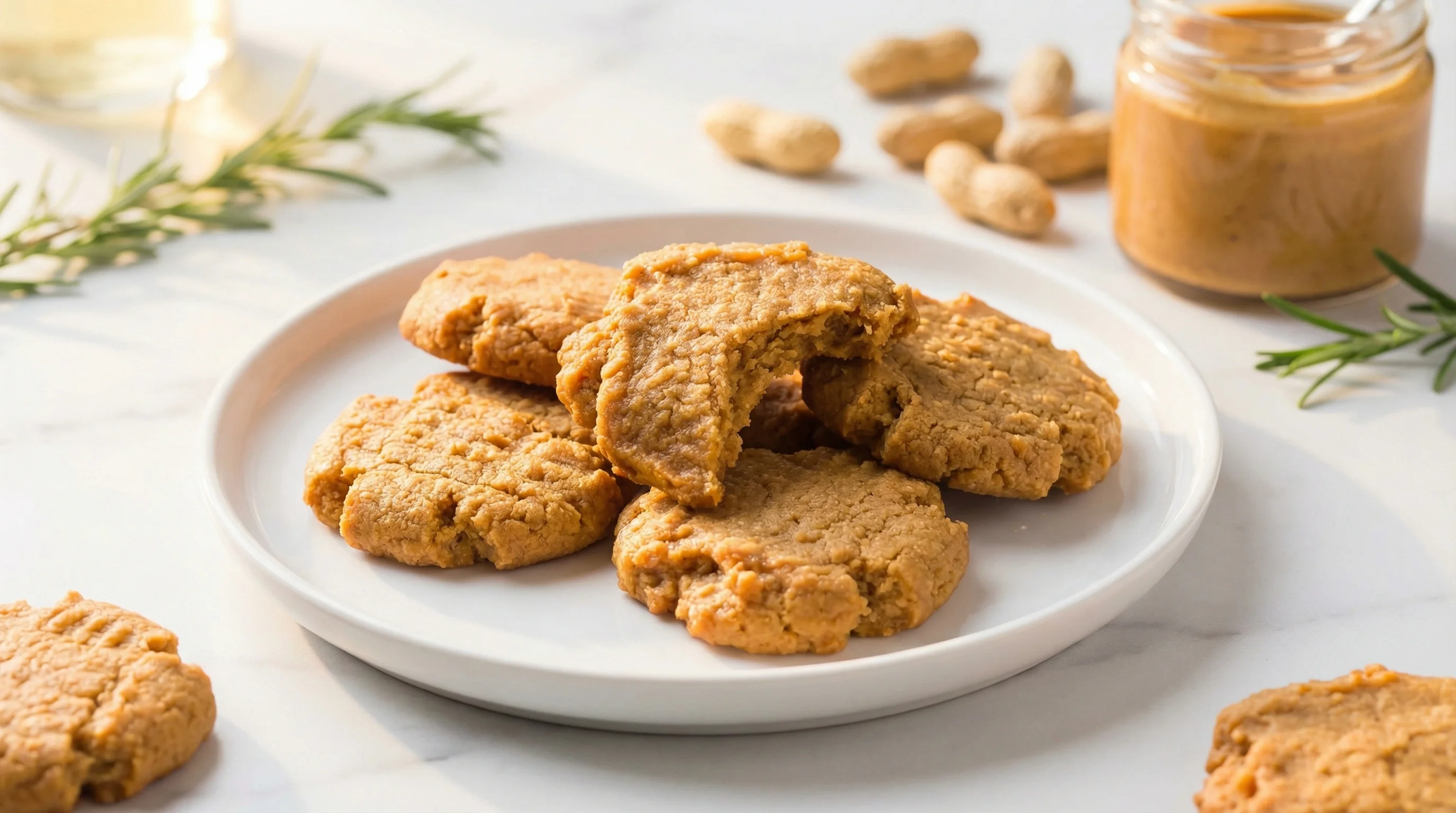
Low FODMAP Peanut Butter Cookies
Irresistibly chewy peanut butter cookies that are completely gut-friendly! These classic treats prove you don't need to sacrifice flavor on a low FODMAP diet.
These cookies are low FODMAP when enjoyed in appropriate portions. Peanut butter is low FODMAP up to 2 tablespoons (32g) per serving, and each cookie contains approximately 10g of peanut butter, making 2-3 cookies a safe serving. The recipe uses gluten-free flour instead of wheat flour, lactose-free butter instead of regular butter, and regular sugar which is naturally low FODMAP. Eggs and vanilla extract are also low FODMAP. Stick to the recommended portion size of 2-3 cookies per sitting to stay within safe limits.
There's something magical about the simplicity of a perfect peanut butter cookie. When you're navigating the low FODMAP diet, finding treats that satisfy your sweet tooth without triggering symptoms can feel like searching for a needle in a haystack. These cookies are that needle—and they're absolutely delicious.
What makes these cookies special is their incredible texture: crispy edges that give way to a soft, chewy center packed with rich peanut butter flavor. The secret lies in using natural peanut butter (which is naturally low FODMAP) and a careful balance of gluten-free flour that creates the perfect crumb. Unlike many gluten-free baked goods that can be dry or crumbly, these cookies stay moist and tender thanks to the fat content in the peanut butter. The classic fork crosshatch pattern isn't just for looks—it helps the cookies bake evenly and creates those coveted crispy edges.
For anyone with IBS, these cookies are a game-changer. Peanut butter is considered low FODMAP in servings up to 2 tablespoons, making it an excellent protein-rich ingredient for baking. The recipe uses lactose-free butter and avoids high-FODMAP sweeteners like honey or agave, relying instead on regular sugar which is perfectly safe. Each cookie is portioned to keep you well within safe limits, so you can enjoy 2-3 cookies without worry. Whether you're baking for yourself or sharing with family who don't follow a low FODMAP diet, these cookies will disappear fast—no one will guess they're gut-friendly!
🥗 Ingredients
Metric
- 240g natural peanut butter (smooth or crunchy) Use 100% peanuts with no added ingredients for best FODMAP safety
- 200g granulated sugar Regular white sugar is low FODMAP
- 100g light brown sugar Adds moisture and deeper flavor
- 115g lactose-free butter, softened Room temperature for easy mixing
- 2 large eggs, at room temperature Eggs are low FODMAP and provide structure
- 2 teaspoons vanilla extract Pure vanilla is low FODMAP
- 180g gluten-free all-purpose flour blend Use a blend with xanthan gum already added
- 1 teaspoon baking soda Helps cookies spread and rise
- 1/2 teaspoon salt Enhances the peanut butter flavor
- 60g granulated sugar for rolling Creates a sweet, sparkly exterior
Imperial
- 1 cup natural peanut butter (smooth or crunchy) Use 100% peanuts with no added ingredients for best FODMAP safety
- 1 cup granulated sugar Regular white sugar is low FODMAP
- 1/2 cup light brown sugar, packed Adds moisture and deeper flavor
- 1/2 cup lactose-free butter, softened Room temperature for easy mixing
- 2 large eggs, at room temperature Eggs are low FODMAP and provide structure
- 2 teaspoons vanilla extract Pure vanilla is low FODMAP
- 1 1/2 cups gluten-free all-purpose flour blend Use a blend with xanthan gum already added
- 1 teaspoon baking soda Helps cookies spread and rise
- 1/2 teaspoon salt Enhances the peanut butter flavor
- 1/4 cup granulated sugar for rolling Creates a sweet, sparkly exterior
👨🍳 Instructions
- 1
Prepare the Cookie Dough
In a large mixing bowl, cream together the softened lactose-free butter, peanut butter, granulated sugar, and brown sugar using an electric mixer on medium speed until light and fluffy, about 3-4 minutes. Add the eggs one at a time, beating well after each addition, then mix in the vanilla extract. The mixture should be smooth and well combined.
⏱️ 8 min - 2
Combine Dry Ingredients
In a separate medium bowl, whisk together the gluten-free flour, baking soda, and salt until evenly distributed. This ensures the leavening agent is spread throughout the flour, which helps the cookies rise uniformly.
⏱️ 2 min - 3
Form the Dough
Gradually add the dry ingredients to the wet ingredients, mixing on low speed until just combined. Be careful not to overmix, as this can make the cookies tough. The dough will be thick and slightly sticky. Cover the bowl with plastic wrap and refrigerate for at least 30 minutes—this helps the cookies hold their shape during baking.
⏱️ 35 min - 4
Shape the Cookies
Preheat your oven to 175°C (350°F) and line two baking sheets with parchment paper. Place the rolling sugar in a shallow bowl. Scoop the chilled dough into tablespoon-sized portions and roll each into a smooth ball. Roll each ball in the sugar to coat completely, then place on the prepared baking sheets, spacing them about 5cm (2 inches) apart.
⏱️ 10 min - 5
Create the Classic Pattern
Using a fork, gently press down on each cookie ball to flatten it slightly, creating a crisscross pattern. Press once horizontally, then once vertically. This iconic pattern isn't just decorative—it helps the cookies bake evenly and creates those delicious crispy edges.
⏱️ 5 min - 6
Bake to Perfection
Bake the cookies for 10-12 minutes, until the edges are lightly golden and set but the centers still look slightly soft. They will continue to firm up as they cool. Don't overbake, or they'll become dry instead of chewy.
⏱️ 12 min - 7
Cool and Serve
Remove the baking sheets from the oven and let the cookies cool on the sheets for 5 minutes—this allows them to set properly. Then transfer them to a wire rack to cool completely. Store in an airtight container at room temperature for up to 5 days, or freeze for up to 3 months.
⏱️ 10 min
🔄 FODMAP-Friendly Swaps
Regular butter contains lactose which can trigger symptoms; lactose-free butter provides the same richness without FODMAPs
Wheat flour contains fructans; a good gluten-free blend creates the same texture without triggering IBS symptoms
Honey and agave are high in fructose; regular sugar or pure maple syrup (in limited amounts) are low FODMAP alternatives
While almonds are only low FODMAP in small amounts (10 nuts), peanut butter is safe up to 2 tablespoons and works perfectly in cookies
If adding milk to thin the dough, use lactose-free options to avoid digestive issues
🔬 The Science Behind This Recipe
Why This Recipe Works for Your Gut
These peanut butter cookies are specifically designed to be gentle on sensitive digestive systems. Peanut butter is naturally low in FODMAPs when consumed in moderate portions (up to 2 tablespoons per serving), making it an excellent choice for those managing IBS. Unlike many tree nuts that contain high levels of oligosaccharides that can trigger bloating and discomfort, peanuts are actually legumes with a different carbohydrate structure that most people tolerate well. The natural fats and protein in peanut butter also help slow digestion, which can prevent the rapid fermentation that causes gas and cramping.
The gluten-free flour blend replaces wheat flour, eliminating fructans—one of the most common IBS triggers found in traditional baking. When wheat-based products reach your gut, these fructans can draw excess water into your intestines and ferment quickly, leading to bloating, pain, and irregular bowel movements. By using gluten-free alternatives like rice flour or oat flour, you're removing this trigger while still achieving a satisfying cookie texture. Lactose-free butter provides the rich flavor and moisture of regular butter without the milk sugar that many IBS sufferers struggle to digest properly.
Eggs serve as a natural binder in this recipe and are completely FODMAP-free, offering high-quality protein without any fermentable carbohydrates. This simple combination creates cookies that satisfy your sweet tooth without compromising your digestive comfort. The key is enjoying them mindfully—stick to 2-3 cookies per sitting to keep your peanut butter intake within the recommended low-FODMAP serving size.
Download Printable PDF
Save this recipe for offline use