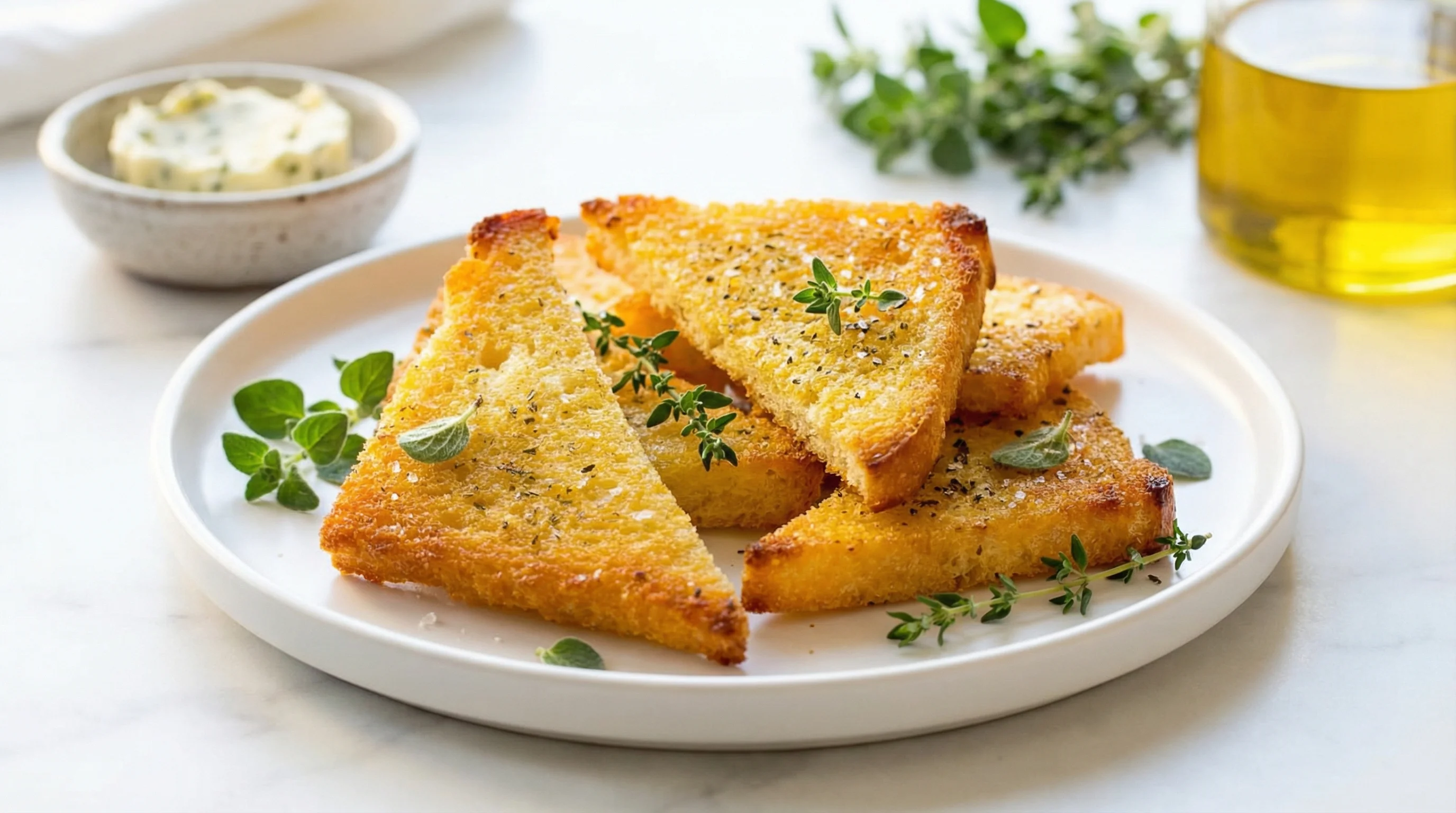
Crispy Low FODMAP Garlic Bread with Herb Butter
Golden, buttery garlic bread that's completely gut-friendly! Crispy edges, soft center, and packed with flavor—the perfect side for any meal.
This recipe is low FODMAP when made as directed. Garlic-infused oil provides garlic flavor without FODMAPs since FODMAPs are water-soluble, not oil-soluble. Ensure no garlic pieces remain in the oil. Chives are low FODMAP in typical serving sizes (up to 1 tablespoon per person). Parsley is low FODMAP. Parmesan cheese is naturally low in lactose due to aging. Gluten-free bread is essential—check ingredients to ensure no high-FODMAP additives like inulin, honey, or high-FODMAP flours. Stick to the recommended serving size of 2-3 slices per person.
There's something magical about garlic bread that makes every meal feel special. The aroma of butter and herbs wafting from the oven, that satisfying crunch when you bite through the golden crust, and the soft, pillowy interior that soaks up every bit of flavor. For those of us following a low FODMAP diet, garlic bread might seem like a distant memory—but it absolutely doesn't have to be.
This recipe uses garlic-infused oil to deliver that unmistakable garlic flavor without the FODMAPs that trigger IBS symptoms. The secret is in the infusion process: garlic's flavor compounds are oil-soluble, but FODMAPs are water-soluble, so they stay behind when you infuse oil with garlic cloves. Combined with fresh herbs, quality butter, and a good gluten-free baguette, you get all the satisfaction of traditional garlic bread without any digestive compromise. The key is achieving that perfect balance of crispy exterior and tender interior—we accomplish this by brushing the bread generously with our herb butter mixture and baking at just the right temperature.
This garlic bread pairs beautifully with pasta dishes, soups, salads, or simply enjoyed on its own as a snack. Make extra herb butter and store it in the freezer for quick weeknight sides. Whether you're hosting a dinner party or just treating yourself to a cozy meal at home, this recipe proves that following a low FODMAP diet doesn't mean sacrificing the foods you love—it just means getting a little creative in the kitchen.
🥗 Ingredients
Metric
- 1 large gluten-free baguette (about 400g) Look for a sturdy gluten-free bread that holds up well to butter
- 120g unsalted butter, softened Must be softened to room temperature for easy spreading
- 60ml garlic-infused olive oil Use store-bought or homemade—ensure no garlic pieces remain
- 3 tablespoons fresh parsley, finely chopped Flat-leaf parsley works best for flavor
- 1 tablespoon fresh chives, finely chopped Chives are low FODMAP and add mild onion-like flavor
- 1 teaspoon dried oregano Adds Mediterranean flavor depth
- 1/2 teaspoon sea salt Adjust to taste
- 1/4 teaspoon black pepper, freshly ground Fresh pepper provides best flavor
- 30g Parmesan cheese, finely grated (optional) Aged Parmesan is naturally low in lactose
Imperial
- 1 large gluten-free baguette (about 14 oz) Look for a sturdy gluten-free bread that holds up well to butter
- 1/2 cup unsalted butter, softened Must be softened to room temperature for easy spreading
- 1/4 cup garlic-infused olive oil Use store-bought or homemade—ensure no garlic pieces remain
- 3 tablespoons fresh parsley, finely chopped Flat-leaf parsley works best for flavor
- 1 tablespoon fresh chives, finely chopped Chives are low FODMAP and add mild onion-like flavor
- 1 teaspoon dried oregano Adds Mediterranean flavor depth
- 1/2 teaspoon sea salt Adjust to taste
- 1/4 teaspoon black pepper, freshly ground Fresh pepper provides best flavor
- 1/4 cup Parmesan cheese, finely grated (optional) Aged Parmesan is naturally low in lactose
👨🍳 Instructions
- 1
Prepare the Herb Garlic Butter
In a medium bowl, combine the softened butter with garlic-infused olive oil and mix until smooth and well incorporated. Add the chopped parsley, chives, oregano, salt, and black pepper. If using Parmesan, fold it in now. Mix everything together until you have a fragrant, evenly distributed herb butter. The mixture should be spreadable but not runny.
⏱️ 5 min - 2
Slice the Bread
Preheat your oven to 200°C (400°F) and line a large baking sheet with parchment paper. Cut the gluten-free baguette in half lengthwise, creating two long halves. If your baguette is particularly long, you can cut it into sections first for easier handling. Place the bread cut-side up on the prepared baking sheet.
⏱️ 3 min - 3
Apply the Butter Mixture
Using a butter knife or offset spatula, generously spread the herb garlic butter over the cut surfaces of the bread, making sure to cover every bit right to the edges. Don't be shy with the butter—this is what creates that irresistible golden crust and rich flavor. You want a thick, even layer that will soak into the bread slightly while leaving enough on top to crisp up.
⏱️ 4 min - 4
First Bake
Place the baking sheet in the preheated oven and bake for 10-12 minutes, until the butter is melted and bubbling and the edges of the bread are just starting to turn golden. Keep an eye on it during this stage, as gluten-free bread can brown quickly.
⏱️ 12 min - 5
Broil for Extra Crispiness
Switch your oven to the broil setting (or increase temperature to 220°C/425°F if you don't have a broil function). Return the bread to the oven and broil for 2-3 minutes, watching carefully, until the top is golden brown and crispy with some darker caramelized spots. The edges should be crunchy while the center remains soft. Remove immediately when it reaches your desired level of crispiness.
⏱️ 3 min - 6
Slice and Serve
Remove the garlic bread from the oven and let it cool for 2-3 minutes—this allows the butter to set slightly and makes slicing easier. Cut each half into 2-inch diagonal slices using a serrated knife. Arrange on a serving platter and serve immediately while still warm and crispy. Any leftovers can be stored in an airtight container and reheated in the oven to restore crispiness.
⏱️ 3 min
🔄 FODMAP-Friendly Swaps
Some people tolerate sourdough spelt due to fermentation reducing FODMAPs, but test tolerance first
For those avoiding all dairy, use lactose-free butter or increase garlic-infused oil to 90ml total
For dairy-free option, use 2 tablespoons nutritional yeast for cheesy, umami flavor
If fresh herbs aren't available, use dried but reduce quantity as dried herbs are more concentrated
Make your own by gently heating olive oil with crushed garlic cloves for 10 minutes, then strain completely
🔬 The Science Behind This Recipe
The Science Behind This Low FODMAP Garlic Bread
The secret to making garlic bread IBS-friendly lies in a clever scientific trick: garlic-infused oil. When garlic cloves steep in oil, only the fat-soluble flavor compounds transfer, while the water-soluble FODMAPs (specifically fructans) stay behind in the solid garlic pieces. This means you get all that beloved garlic taste without the digestive distress. The fructans that typically trigger bloating and discomfort in sensitive individuals simply can't dissolve into the oil, making this a game-changer for anyone who thought they'd have to give up garlic forever.
Gluten-free bread serves as the perfect base because it naturally avoids wheat-based fructans, another common IBS trigger. When paired with butter and aged Parmesan cheese, you're working with ingredients that are naturally low in lactose. Hard, aged cheeses like Parmesan contain minimal lactose since most of it converts to lactic acid during the aging process, making them generally well-tolerated even by those with lactose sensitivity. The high fat content in butter also slows digestion, which can help prevent the rapid transit that sometimes triggers symptoms.
Fresh herbs like parsley, chives, or basil add more than just flavor—they contain natural compounds that may support digestion and reduce inflammation in the gut lining. These herbs are low FODMAP in typical serving sizes and provide antioxidants that support overall gut health. The combination of healthy fats from butter and oil also aids in the absorption of fat-soluble vitamins, making this indulgent-tasting bread surprisingly gentle on sensitive digestive systems.
Download Printable PDF
Save this recipe for offline use