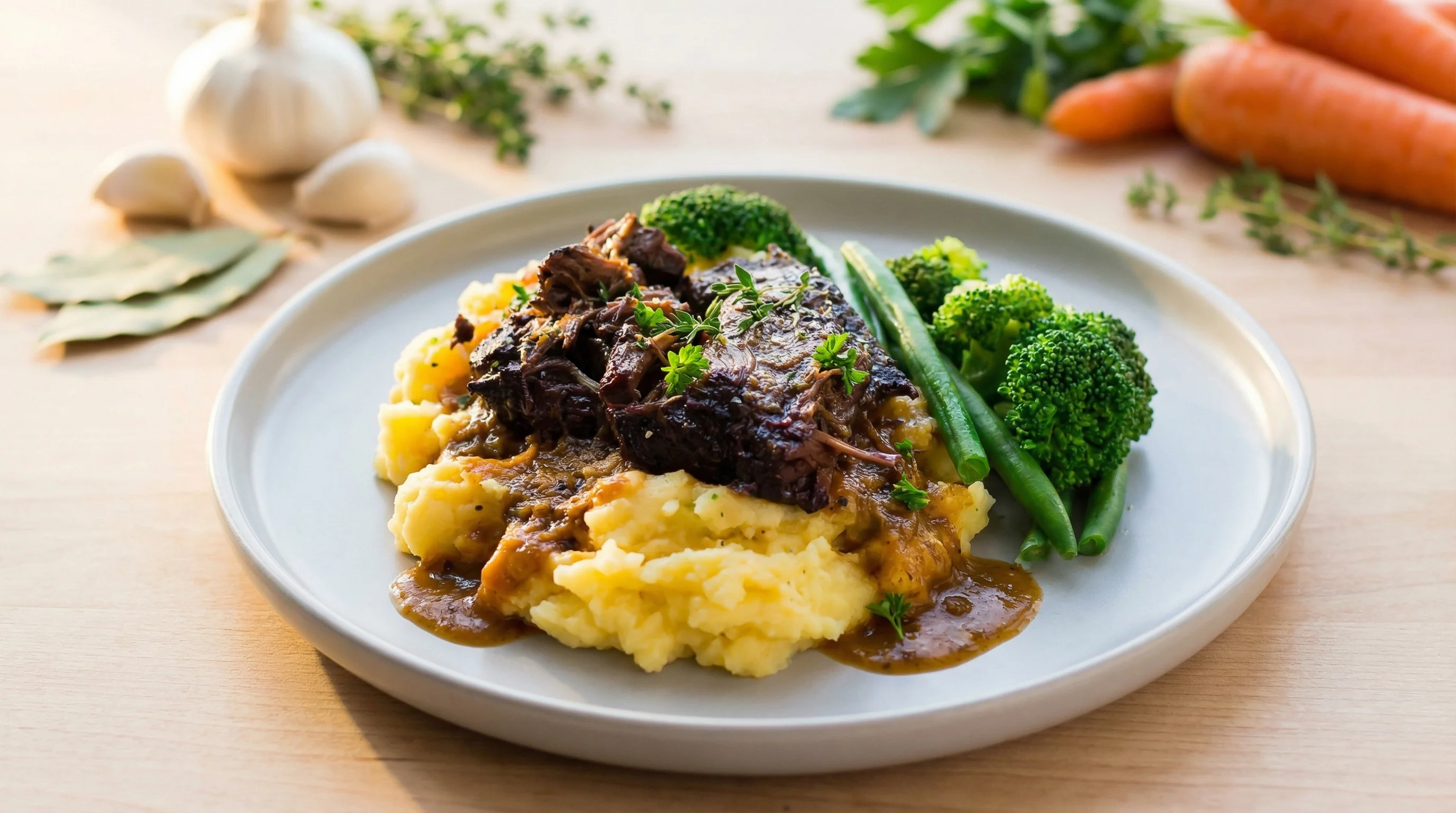
Melt-in-Your-Mouth Low FODMAP Braised Beef Cheeks
Ultra-tender beef cheeks braised until they fall apart, served with silky mashed potatoes and rich gravy—pure comfort food that's gentle on your gut.
This recipe is low FODMAP when prepared as directed with 6 servings. Beef cheeks are naturally FODMAP-free. Garlic-infused oil provides flavor without FODMAPs since the fructans don't transfer to oil. Red wine is safe at approximately 40ml per person in this recipe. Carrots are low FODMAP at about 33g per serving (200g total divided by 6). Celery is low FODMAP at about 17g per serving (100g total divided by 6). Use lactose-free milk and lactose-free butter to ensure dairy components are FODMAP-safe. Check that your beef stock doesn't contain onion or garlic. Tomato paste is safe at 2 tablespoons total for the recipe. Cornstarch is FODMAP-free.
There's something magical about beef cheeks that transforms during slow cooking. This often-overlooked cut becomes incredibly tender and succulent when braised low and slow, practically melting on your tongue with each bite. For those following a low FODMAP diet, this recipe proves that managing IBS doesn't mean sacrificing deeply satisfying comfort food. The secret lies in building flavor through FODMAP-friendly aromatics like garlic-infused oil, fresh herbs, and a splash of red wine, creating a rich, velvety gravy that rivals any traditional braise.
Beef cheeks are naturally collagen-rich, which means they need extended cooking time to break down those tough fibers into gelatin—the source of that luxurious, silky texture. This recipe uses a combination of stovetop searing and oven braising to develop complex flavors while keeping the process hands-off. The result is fork-tender meat bathed in a glossy sauce that coats creamy mashed potatoes perfectly. It's the kind of meal that makes your kitchen smell incredible and leaves everyone at the table completely satisfied.
This dish is ideal for meal prep or entertaining since it actually improves when made a day ahead, allowing the flavors to deepen and meld. The FODMAP-friendly approach uses carefully selected ingredients and proper portions to ensure you can enjoy every bite without worry. Serve it with your favorite low FODMAP vegetables or a simple green salad for a restaurant-quality meal that's surprisingly easy to prepare at home.
🥗 Ingredients
Metric
- 1.2kg beef cheeks, trimmed
- 3 tablespoons garlic-infused olive oil divided use
- 2 medium carrots, diced about 200g total
- 2 stalks celery, diced about 100g total
- 2 tablespoons tomato paste low FODMAP in this amount
- 250ml dry red wine FODMAP-safe in this amount, about 40ml per serving
- 750ml low FODMAP beef stock ensure no onion or garlic added
- 2 bay leaves
- 4 sprigs fresh thyme plus extra for garnish
- Salt and freshly ground black pepper to taste
- 1kg starchy potatoes, peeled and cubed such as Russet or Maris Piper
- 180ml lactose-free milk, warmed
- 60g lactose-free butter or regular butter if tolerated
- 2 tablespoons cornstarch for thickening gravy
Imperial
- 2.6 lbs beef cheeks, trimmed
- 3 tablespoons garlic-infused olive oil divided use
- 2 medium carrots, diced about 7 oz
- 2 stalks celery, diced
- 1 cup dry red wine FODMAP-safe in this amount
- 2 cups beef stock check for onion/garlic
- 2 tablespoons tomato paste
- 2 bay leaves
- 4 sprigs fresh thyme
- 2 tablespoons cornstarch for thickening gravy
- Salt and black pepper to taste
- 2 lbs potatoes, peeled and cubed for mashing
- 1/4 cup lactose-free milk warmed
- 3 tablespoons butter or lactose-free alternative
👨🍳 Instructions
- 1
Prepare and Sear the Beef
Preheat your oven to 160°C (320°F). Pat the beef cheeks completely dry with paper towels and season generously with salt and pepper on all sides. Heat 2 tablespoons of garlic-infused oil in a large Dutch oven or heavy-bottomed pot over medium-high heat. Working in batches to avoid crowding, sear the beef cheeks for 3-4 minutes per side until deeply browned and caramelized. Transfer the seared meat to a plate and set aside.
⏱️ 15 min - 2
Build the Braising Base
Reduce heat to medium and add the remaining tablespoon of garlic-infused oil to the pot. Add the diced carrots and celery, cooking for 5-6 minutes until they begin to soften and develop some color, stirring occasionally. Stir in the tomato paste and cook for another minute until it darkens slightly and becomes fragrant.
⏱️ 7 min - 3
Deglaze and Add Liquid
Pour in the red wine, using a wooden spoon to scrape up all the flavorful browned bits stuck to the bottom of the pot. Let the wine simmer for 3-4 minutes to reduce slightly and cook off the alcohol. Add the beef stock, bay leaves, and thyme sprigs, then return the seared beef cheeks to the pot along with any accumulated juices. The liquid should come about halfway up the sides of the meat.
⏱️ 8 min - 4
Braise Until Tender
Bring the liquid to a gentle simmer, then cover the pot with a tight-fitting lid and transfer it to the preheated oven. Braise for 3.5 to 4 hours, checking occasionally, until the beef cheeks are incredibly tender and can be easily pulled apart with a fork. The meat should yield with almost no resistance.
⏱️ 240 min - 5
Prepare the Mashed Potatoes
About 30 minutes before the beef is done, place the cubed potatoes in a large pot and cover with cold salted water. Bring to a boil over high heat, then reduce to a simmer and cook for 15-18 minutes until the potatoes are completely tender when pierced with a fork. Drain well and return to the pot. Add the warmed lactose-free milk and lactose-free butter, then mash until smooth and creamy. Season with salt and pepper to taste, cover, and keep warm.
⏱️ 25 min - 6
Finish the Gravy
Carefully remove the beef cheeks from the braising liquid and transfer to a serving platter, covering loosely with foil to keep warm. Strain the braising liquid through a fine-mesh sieve into a saucepan, discarding the vegetables and herbs. Skim off any excess fat from the surface. Mix the cornstarch with 3 tablespoons of cold water to create a slurry, then whisk it into the braising liquid. Bring to a simmer over medium heat and cook for 3-4 minutes, stirring frequently, until the gravy thickens to your desired consistency. Taste and adjust seasoning with salt and pepper.
⏱️ 10 min - 7
Serve
Divide the creamy mashed potatoes among serving plates and top each portion with a beef cheek. Generously ladle the rich gravy over the meat and potatoes. Garnish with fresh thyme leaves if desired and serve immediately while piping hot.
⏱️ 5 min
🔄 FODMAP-Friendly Swaps
If garlic-infused oil is unavailable, use plain oil and increase fresh herbs for flavor
For alcohol-free version while maintaining acidity and depth of flavor
For those avoiding all dairy or preferring plant-based options
For dairy-free or vegan diets, use unsweetened varieties
Many commercial stocks contain onion or garlic; homemade ensures FODMAP safety
Alternative thickeners that work equally well and are FODMAP-friendly
Lower carb alternatives that are still creamy and low FODMAP in appropriate portions
🔬 The Science Behind This Recipe
# The Digestive Science Behind This Comforting Braise
This slow-cooked beef dish is a perfect example of how low FODMAP cooking doesn't mean sacrificing flavor or comfort. Beef cheeks are naturally FODMAP-free because animal proteins contain no fermentable carbohydrates—the sugars that trigger IBS symptoms. The long, slow braising process also breaks down tough collagen into gelatin, which is incredibly gentle on the digestive system and may even support gut lining health. This makes the meat extraordinarily tender and easy to digest, requiring less work from your already-sensitive stomach.
The genius of this recipe lies in the garlic-infused oil, which delivers all the rich, savory flavor of garlic without the fructans that cause bloating and discomfort. When garlic is heated in oil, its flavor compounds transfer to the fat, but the problematic FODMAPs (which are water-soluble, not fat-soluble) stay behind in the discarded cloves. This simple technique transforms a typically high-FODMAP ingredient into a safe flavor powerhouse.
Carrots and potatoes provide satisfying substance while remaining gentle on your gut. Both are low in FODMAPs when consumed in reasonable portions and offer soluble fiber that can help regulate digestion without overwhelming your system. Even the red wine becomes low FODMAP during cooking—the alcohol evaporates and concentrations become diluted, making it safe for most IBS sufferers. The result is a deeply flavorful, restaurant-quality meal that respects your digestive needs while nourishing your body with protein, vitamins, and gut-friendly nutrients.
Download Printable PDF
Save this recipe for offline use