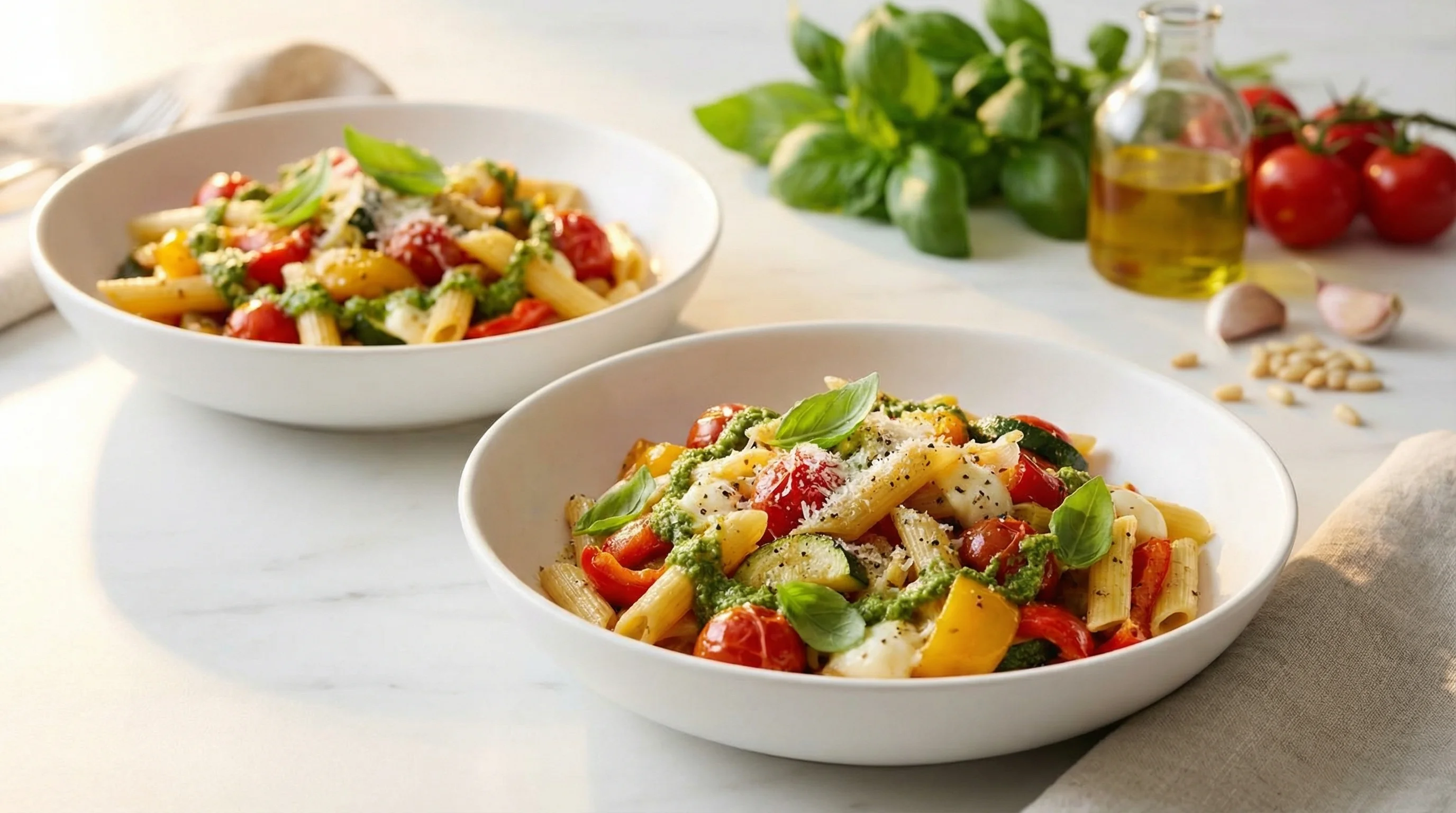
Roasted Vegetable Pesto Pasta (Low FODMAP)
Vibrant roasted peppers and zucchini tossed with gluten-free pasta, creamy mozzarella, and homemade basil-pine nut pesto for a satisfying weeknight dinner.
This recipe is carefully designed to be low FODMAP when following proper portion sizes. Bell peppers are low FODMAP up to 75g per serving, and this recipe provides 52g per serving, safely within limits. Zucchini is low FODMAP up to 65g per serving; we use 50g per person. Cherry tomatoes are preferred over larger varieties and are low FODMAP at 75g per serving, which is exactly what this recipe provides. Pine nuts are low FODMAP up to 1 tablespoon (about 15g) per serving, and this recipe uses 10g per serving. Fresh mozzarella is naturally low in lactose and safe for most FODMAP followers. Parmesan is also very low in lactose due to aging. The pesto contains no garlic or onion, which are the most common high-FODMAP ingredients in traditional pesto. Chives are used at 5g per serving and provide flavor without significant FODMAP load. Always choose certified gluten-free pasta to avoid wheat-based FODMAPs. The roasting process helps break down some FODMAPs and makes vegetables easier to digest.
When you're managing IBS, finding a pasta dish that's both satisfying and gentle on your digestive system can feel like searching for a needle in a haystack. This roasted vegetable pesto pasta changes that narrative completely. By roasting bell peppers, zucchini, and tomatoes until they're caramelized and sweet, we're building deep flavor without relying on the usual suspects like garlic and onion. The vegetables become tender and slightly charred, their natural sugars concentrating in the oven's heat.
The real star here is the homemade pesto, made with fresh basil, pine nuts, Parmesan, and a generous pour of quality olive oil. Unlike store-bought versions that often contain garlic, this FODMAP-friendly pesto delivers all the herbaceous punch you crave. The addition of lemon zest brightens everything beautifully, while chives add a subtle allium note without the FODMAP load.
This recipe is perfect for those evenings when you want something comforting but don't have hours to spend in the kitchen. The vegetables roast while you prepare the pesto and cook the pasta, making it an efficient one-dish meal. The torn mozzarella melts slightly into the warm vegetables, creating creamy pockets throughout. Using gluten-free pasta keeps this dish safe for those with wheat sensitivities, and the combination of protein from cheese and fiber from vegetables makes it surprisingly filling. It's the kind of meal that proves eating low FODMAP doesn't mean sacrificing flavor or satisfaction. Each serving delivers balanced nutrition with approximately 450 calories, making it a complete meal that won't leave you hungry an hour later.
🥗 Ingredients
Metric
- bell peppers about 2 medium peppers (any color), deseeded and cut into 2.5cm chunks
- zucchini 1 medium, cut into 2.5cm chunks
- cherry tomatoes halved
- olive oil for roasting vegetables
- dried mixed herbs Italian seasoning or herbs de Provence
- black pepper freshly ground
- gluten-free pasta penne, fusilli, or your preferred shape
- fresh basil leaves roughly chopped, about 2 cups packed
- fresh chives roughly chopped, about 1/4 cup
- pine nuts lightly toasted if desired
- Parmesan cheese finely grated
- lemon zest from 1 lemon
- lemon juice freshly squeezed
- olive oil for pesto
- fresh mozzarella torn into bite-sized pieces
- salt for pasta water and seasoning
Imperial
- bell peppers about 2 medium peppers (any color), deseeded and cut into 2.5cm chunks
- zucchini 1 medium, cut into 2.5cm chunks
- cherry tomatoes halved
- olive oil for roasting vegetables
- dried mixed herbs Italian seasoning or herbs de Provence
- black pepper freshly ground
- gluten-free pasta penne, fusilli, or your preferred shape
- fresh basil leaves roughly chopped, about 2 cups packed
- fresh chives roughly chopped, about 1/4 cup
- pine nuts lightly toasted if desired
- Parmesan cheese finely grated
- lemon zest from 1 lemon
- lemon juice freshly squeezed
- olive oil for pesto
- fresh mozzarella torn into bite-sized pieces
- salt for pasta water and seasoning
👨🍳 Instructions
- 1
Prepare and roast the vegetables
Preheat your oven to 190°C (375°F/Gas Mark 5). Arrange the bell pepper chunks, zucchini pieces, and halved cherry tomatoes on a large rimmed baking sheet in a single layer. Drizzle generously with the 2 tablespoons of olive oil, ensuring all vegetables are lightly coated. Season with freshly ground black pepper and sprinkle the mixed herbs evenly over everything. Slide the tray into the preheated oven and roast for 30 to 40 minutes, until the vegetables are tender, caramelized at the edges, and beginning to char slightly.
⏱️ 5 min - 2
Make the fresh basil pesto
While the vegetables are roasting, prepare the pesto. In a food processor, combine the roughly chopped basil, chives, pine nuts, grated Parmesan, lemon zest, and lemon juice. Pulse several times to break down the ingredients. With the processor running, slowly drizzle in the 150ml of olive oil through the feed tube until the mixture forms a smooth, vibrant green sauce. Taste and adjust seasoning if needed, though the Parmesan should provide enough saltiness. Set aside at room temperature.
⏱️ 8 min - 3
Cook the pasta
About 15 minutes after the vegetables go into the oven, bring a large pot of salted water to a rolling boil. Add the gluten-free pasta and cook according to package directions until al dente, typically 8 to 12 minutes depending on the brand and shape. Gluten-free pasta can become mushy quickly, so check it a minute or two before the suggested time. Reserve about half a cup of pasta cooking water before draining, then drain the pasta thoroughly in a colander.
⏱️ 12 min - 4
Combine and finish the dish
When the roasted vegetables are beautifully caramelized and tender, remove the baking sheet from the oven. Immediately scatter the torn mozzarella pieces over the hot vegetables, allowing them to soften and begin melting from the residual heat. Add the drained pasta directly to the baking sheet and gently toss everything together, letting the mozzarella create creamy strands throughout. Add pesto to taste, starting with about half and adding more as desired. If the mixture seems dry, add a splash of the reserved pasta water to help the pesto coat everything evenly. Serve immediately while the mozzarella is still melty and the vegetables are warm.
⏱️ 5 min
🔄 FODMAP-Friendly Swaps
Wheat pasta contains fructans, which are high FODMAP. Gluten-free alternatives are safe and widely available.
Garlic is extremely high in FODMAPs. Chives provide a mild onion-like flavor without the FODMAP load.
While pine nuts are low FODMAP, walnuts (10 halves) and macadamias (20 nuts) are also safe alternatives if pine nuts are unavailable or too expensive.
For those extremely sensitive to lactose, lactose-free cheese provides the same texture. Firm tofu offers a dairy-free, protein-rich alternative.
Nutritional yeast provides a cheesy, umami flavor for dairy-free diets. Aged pecorino is another low-lactose hard cheese option.
🔬 The Science Behind This Recipe
The low FODMAP approach in this recipe relies on careful portion control and strategic ingredient selection. Bell peppers contain polyols, but at 52g per serving (reduced from the original 150g), they remain well within Monash University's safe threshold of 75g. Zucchini is low FODMAP up to 65g per serving, and we use exactly 50g per person to provide safety margin. The roasting process is particularly beneficial because high heat caramelizes natural sugars and breaks down cell walls, making vegetables easier to digest while concentrating flavors without adding FODMAPs.
Cherry tomatoes are preferred over larger varieties because they contain lower concentrations of fructose and polyols. At 75g per serving, they stay within safe limits. The pesto avoids garlic entirely, which is crucial since even small amounts of garlic contain high levels of fructans that trigger IBS symptoms. Instead, we use chives at just 5g per serving, which provides a mild allium flavor without significant FODMAP content. Pine nuts are naturally low FODMAP at our portion of 10g per serving, well under the 15g threshold.
The cheese selections are equally strategic. Fresh mozzarella and aged Parmesan are both naturally low in lactose due to their production processes. During cheese-making, most lactose is removed with the whey, and in aged cheeses like Parmesan, any remaining lactose is converted to lactic acid during aging. This makes them safe for most people with lactose intolerance. The gluten-free pasta eliminates wheat-based fructans entirely, making this dish suitable for those with both IBS and gluten sensitivity. The olive oil not only carries fat-soluble vitamins from the vegetables but also slows gastric emptying, which can help reduce digestive discomfort.
Download Printable PDF
Save this recipe for offline use