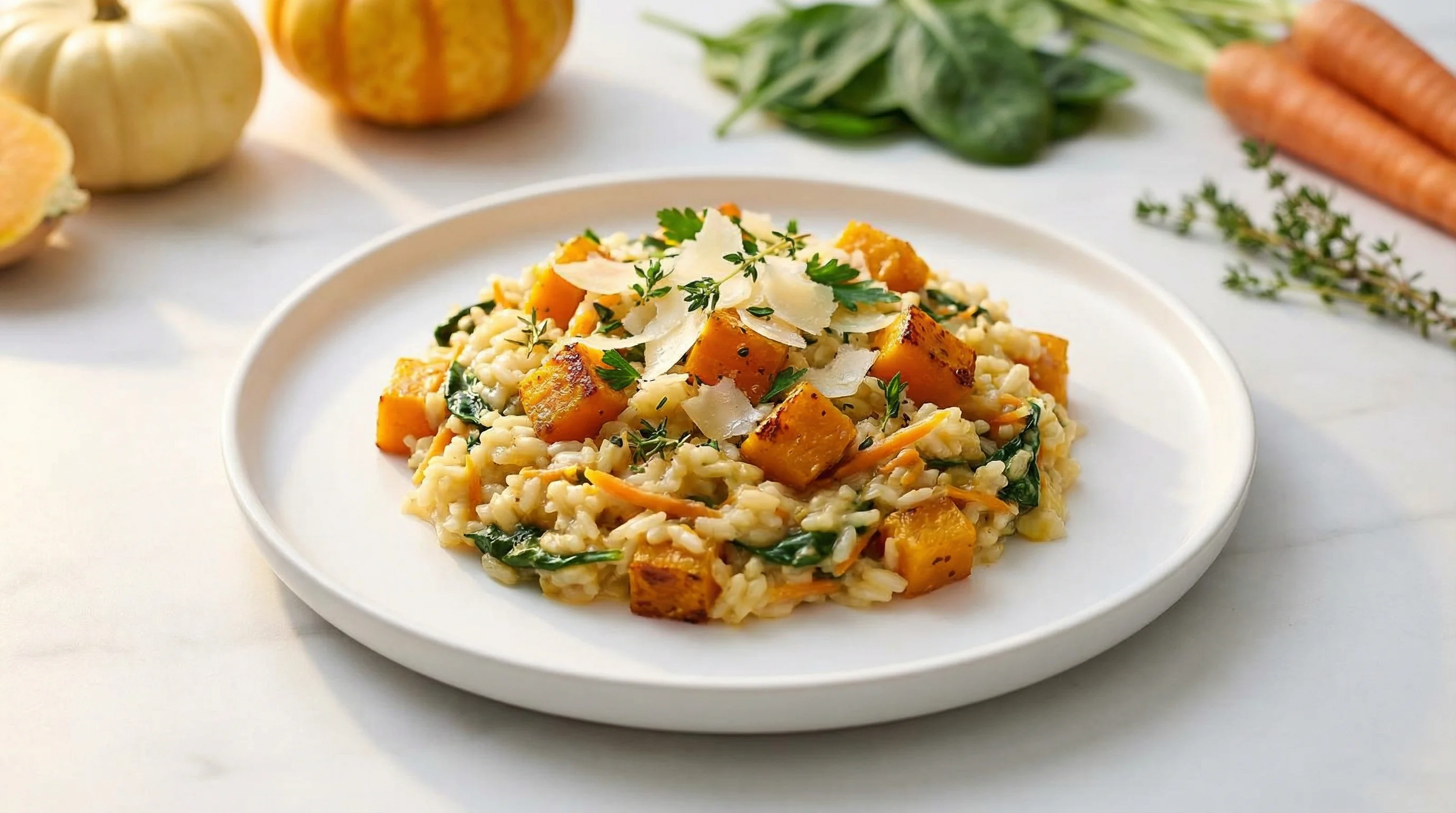
Creamy Garden Vegetable Risotto (Low FODMAP)
Silky Italian risotto loaded with tender butternut squash, sweet carrots, and vibrant spinach. A comforting low FODMAP dinner that's surprisingly easy to master.
This recipe is carefully designed to be low FODMAP when consumed in the specified portions. Garlic-infused oil provides flavor without FODMAPs since fructans are water-soluble and don't transfer to oil during infusion. Butternut squash is low FODMAP at 65g per serving; this recipe uses 37.5g per portion. Celery is low FODMAP at 30g (one small stalk) per serving; this recipe uses 7.5g per portion. Carrots are low FODMAP at 75g per serving; this recipe uses 25g per portion. Spinach is low FODMAP at 75g per serving; this recipe uses 50g per portion. Parmesan is naturally low in lactose due to aging and is safe for most people with lactose intolerance at 15g per serving. Dry white wine is low FODMAP as the fermentation process converts sugars to alcohol. Arborio rice is naturally low FODMAP. The vegetable stock must be low FODMAP certified or homemade without onion or garlic. Be mindful of portion sizes, as eating more than one serving may push some ingredients into moderate FODMAP territory.
There's something magical about a perfectly cooked risotto – that moment when you take your first spoonful and the creamy, tender rice melts on your tongue. For those following a low FODMAP diet, risotto might seem off-limits due to the traditional onion and garlic base, but this recipe proves otherwise. By using garlic-infused oil and building flavor through roasted butternut squash, savory yeast extract, and Parmesan cheese, we create a dish that's every bit as satisfying as the classic version.
This vegetable-forward risotto celebrates the natural sweetness of butternut squash and carrots while incorporating iron-rich spinach for color and nutrition. The key to success lies in patience – allowing the squash to caramelize slowly brings out its natural sugars, while adding stock gradually ensures each grain of rice becomes perfectly creamy without turning mushy. The yeast extract might seem like an unusual ingredient, but it adds a depth of umami flavor that makes this vegetarian dish incredibly satisfying.
What makes this recipe particularly wonderful for IBS sufferers is that it's gentle on the digestive system while being packed with nutrients. The arborio rice provides easily digestible carbohydrates, while the vegetables offer fiber in moderate, tolerable amounts. The cooking process breaks down the vegetables, making them even easier to digest. Whether you're cooking for yourself or serving guests who don't follow a low FODMAP diet, this risotto will impress everyone at the table. Serve it as a main course with a simple green salad, or as an elegant side dish for grilled chicken or fish.
🥗 Ingredients
Metric
- garlic-infused oil divided (ensure oil is made with garlic cloves only, no garlic pieces remaining)
- butternut squash peeled, deseeded, and cut into 3cm chunks (37.5g per serving)
- low FODMAP vegetable stock ensure stock contains no onion or garlic; homemade or certified low FODMAP brand
- yeast extract such as Marmite or Vegemite, for umami depth
- dried mixed herbs Italian seasoning or herbs de Provence work well
- salt plus more to taste
- celery stalk 1 medium stalk, finely chopped (about 7.5g per serving)
- arborio rice short-grain risotto rice; do not substitute with long-grain
- dry white wine such as Pinot Grigio or Sauvignon Blanc; ensure it's dry, not sweet
- carrots peeled and coarsely grated (25g per serving)
- Parmesan cheese finely grated, aged at least 12 months for lowest lactose content
- baby spinach fresh leaves, roughly chopped if large (50g per serving)
- black pepper freshly ground, or to taste
Imperial
- garlic-infused oil divided (ensure oil is made with garlic cloves only, no garlic pieces remaining)
- butternut squash peeled, deseeded, and cut into 1-inch chunks (1.3oz per serving)
- low FODMAP vegetable stock ensure stock contains no onion or garlic; homemade or certified low FODMAP brand
- yeast extract such as Marmite or Vegemite, for umami depth
- dried mixed herbs Italian seasoning or herbs de Provence work well
- salt plus more to taste
- celery stalk 1 medium stalk, finely chopped (about 0.25oz per serving)
- arborio rice short-grain risotto rice; do not substitute with long-grain
- dry white wine such as Pinot Grigio or Sauvignon Blanc; ensure it's dry, not sweet
- carrots peeled and coarsely grated (0.9oz per serving)
- Parmesan cheese finely grated, aged at least 12 months for lowest lactose content
- baby spinach fresh leaves, roughly chopped if large (1.75oz per serving)
- black pepper freshly ground, or to taste
👨🍳 Instructions
- 1
Roast the butternut squash
Heat 1 tablespoon of garlic-infused oil in a medium frying pan over low-medium heat. Add the butternut squash chunks and cook for 20 minutes, turning regularly with a spatula, until the pieces are tender when pierced with a fork and have developed golden-brown caramelized edges. The slow cooking brings out the natural sweetness of the squash.
⏱️ 20 min - 2
Prepare the stock
While the squash cooks, pour the low FODMAP vegetable stock into a large saucepan and stir in the yeast extract, dried herbs, and 1 teaspoon of salt. Bring to a gentle simmer over medium heat, stirring occasionally to dissolve the yeast extract completely. Once simmering, reduce the heat to low and keep the stock warm throughout the cooking process. This savory stock will infuse the rice with deep, umami-rich flavor.
⏱️ 5 min - 3
Start the risotto base
In a large, heavy-bottomed saucepan, heat the remaining 2 tablespoons of garlic-infused oil over medium heat. Add the finely chopped celery and cook for 2 minutes, stirring frequently, until it begins to soften but hasn't browned. Add the arborio rice and stir constantly for 1 minute, coating each grain with oil until the edges become slightly translucent. This toasting step is crucial for achieving the perfect creamy texture.
⏱️ 3 min - 4
Build the risotto
Pour in the white wine and stir continuously until it has almost completely evaporated and been absorbed by the rice, about 2 minutes. Add the grated carrots and stir for 30 seconds to combine. Now begin adding the warm stock one ladleful at a time (approximately 100ml per addition). Stir regularly and wait until each addition is almost completely absorbed before adding the next. Continue this process for 15-20 minutes, until the rice is tender but still has a slight bite in the center, and the mixture has a creamy, flowing consistency.
⏱️ 20 min - 5
Finish with greens and cheese
When the rice is perfectly cooked, reduce the heat to low and stir in two-thirds of the grated Parmesan cheese. Add the spinach leaves in handfuls, stirring gently after each addition until the leaves wilt into the risotto. This should take about 2 minutes. Season generously with freshly ground black pepper and additional salt if needed. Gently fold in half of the roasted butternut squash, keeping the pieces intact as much as possible.
⏱️ 3 min - 6
Serve
Divide the risotto among four warm serving bowls. Top each portion with the remaining roasted butternut squash pieces and sprinkle with the remaining Parmesan cheese. Serve immediately while the risotto is hot and creamy, as it will continue to thicken as it sits. For best results, enjoy within 5 minutes of plating.
⏱️ 2 min
🔄 FODMAP-Friendly Swaps
For those extremely sensitive to lactose, though aged Parmesan is typically well-tolerated due to minimal lactose content
For alcohol-free version while maintaining acidity and brightness
If yeast extract is unavailable or not preferred; maintains umami depth
Both are low FODMAP alternatives that provide different flavor profiles while maintaining vegetable content
Low FODMAP leafy green alternatives that add color and nutrition
🔬 The Science Behind This Recipe
Risotto's signature creaminess comes from the starch released by arborio rice during the cooking process. Unlike long-grain rice, arborio contains high levels of amylopectin, a branched starch molecule that dissolves into the cooking liquid when agitated through constant stirring. This creates a naturally creamy texture without needing excessive amounts of butter or cream. The gradual addition of warm stock allows the rice to release starch slowly and evenly, preventing the grains from cooking too quickly on the outside while remaining hard in the center. For those with IBS, this cooking method is beneficial because it partially breaks down the rice's structure, making it easier to digest. The garlic-infused oil works perfectly for low FODMAP cooking because fructans (the problematic FODMAPs in garlic) are water-soluble, not fat-soluble, so they don't transfer into the oil during infusion. This allows you to enjoy garlic flavor without the digestive distress. The butternut squash and carrots provide beta-carotene and soluble fiber, which can help regulate digestion, while the Parmesan adds protein and calcium with minimal lactose since the aging process breaks down most of the milk sugars.
Download Printable PDF
Save this recipe for offline use